New - 3 Hours Ago


$899,000
Active
4
Beds
3
Baths
2418
Sqft
0.31
Acres
3651 Purple Martin Ct, Mount Pleasant, SC 29466
MLS#: 26028071


Mount Pleasant is not one market. It is three search bands, and the listing feed above shows what is actually on the market right now across all of them. South of the Isle of Palms Connector, near the Ravenel Bridge, you find the oldest lots and the shortest commute. Central Mount Pleasant fills in with established 1980s and 1990s subdivisions. North of the connector, along Highway 17 and toward Highway 41, is where the last two decades of growth happened and where most new construction still comes online. We match buyers to the right band before we ever tour a house, because a cottage near the bridge and a townhome on the north end can both say Mount Pleasant on the listing and feel like different towns.
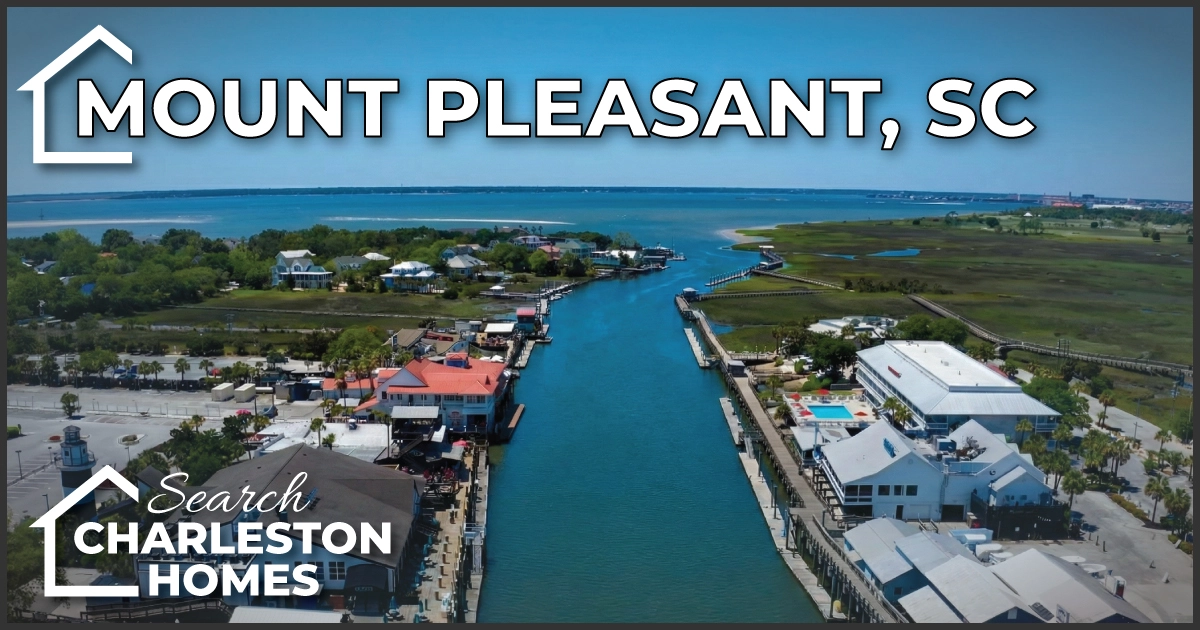
Mount Pleasant lies directly across the Arthur Ravenel Jr. Bridge from downtown Charleston, so a commute that takes 30 to 40 minutes from parts of Berkeley or Dorchester County can take 10 to 15 minutes from central Mount Pleasant. That access, plus the beaches at Isle of Palms and Sullivan's Island, is the biggest reason buyers pay a premium here over other Charleston-area suburbs. The town also functions on its own. A growing restaurant and retail base along Coleman Boulevard and Highway 17 keeps most daily errands inside town limits, and Palmetto Islands County Park covers close to 950 acres of tidal marsh with trails and a water park. Shem Creek's working shrimp boat docks give the area a working waterfront most planned suburbs cannot match.
The town splits into three bands, and the band you pick matters more than any single neighborhood.
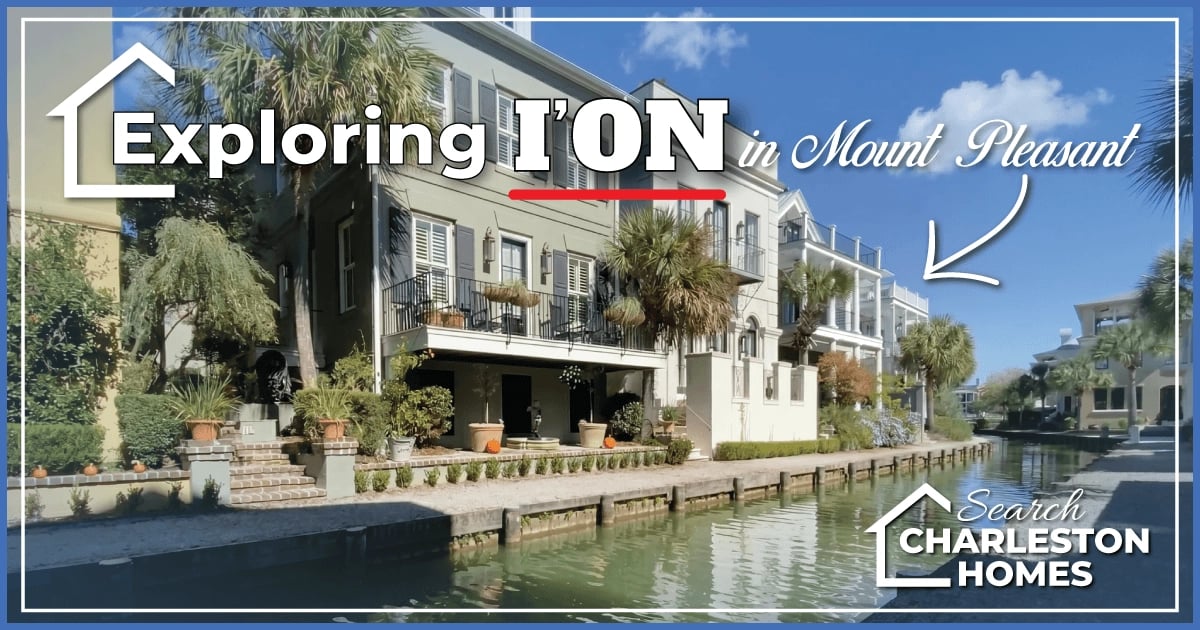
The south end carries the oldest character and the shortest bridge commute. Old Village is the original 37-block waterfront core with no HOA, a local preservation commission, and Shem Creek at its edge. I'On adds a walkable New Urbanist village with Charleston-inspired architecture, village shops, and Hobcaw Creek marsh just east of Old Village.
The middle band holds the established 1980s and 1990s subdivisions and some of the town's most walkable pockets. Belle Hall anchors the central Mount Pleasant retail corridor with a village layout and The Grove section. Snee Farm is the established 1970s golf community on Charles Pinckney's old plantation grounds, with a George Cobb course and the Charles Pinckney National Historic Site next door. Charleston National centers on a Rees Jones golf course where the club membership operates separately from the HOA.
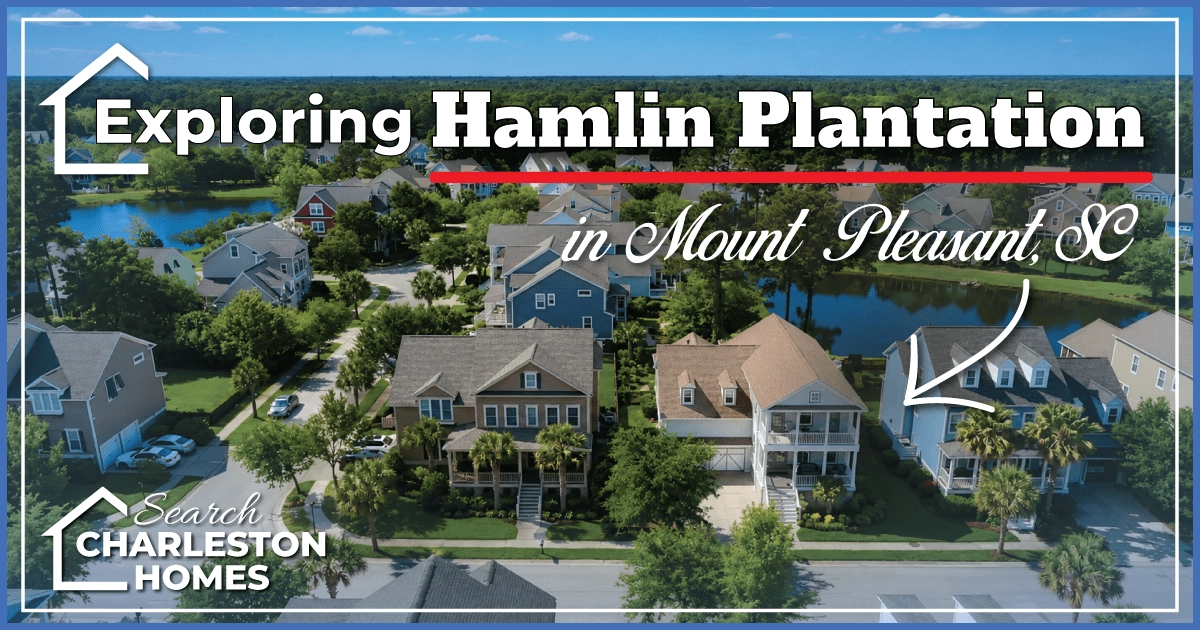
The water-access communities add creek, marsh, and dock lots. Brickyard Plantation brings Horlbeck Creek access, a community boat ramp, and deepwater dock lots. Hamlin Plantation spans Waverly townhomes through Sound marsh-front estates with no gate and no golf. Longpoint adds four subsections around a county park backyard and conservation waterfront.
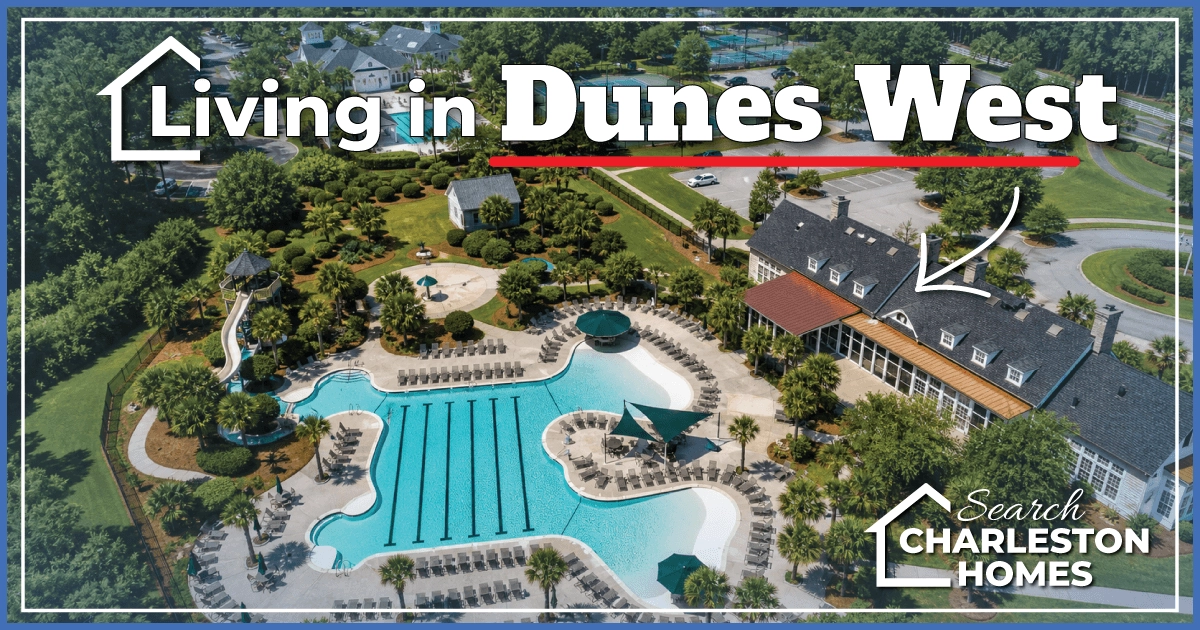
North of the connector is where the last two decades of growth happened, and the largest master-planned communities cluster here. Carolina Park spans close to 1,700 acres across The Village and Riverside, planned around a knowledge hub with the elementary school, library, and fire station inside the neighborhood. Park West is the town's largest master plan, with about 2,700 homes across 29 subdivisions, three on-site public schools, and relatively low shared-amenity dues for a community of its size. Dunes West is a manned-gate, two-tier community of about 1,500 acres on the Wando River, with an Arthur Hills golf course separate from the POA. Rivertowne is a smaller, non-gated golf community on the Wando with the only Arnold Palmer Signature course in the Charleston area and deepwater dock lots.
If you already know the home type, these Mount Pleasant searches narrow the feed faster than browsing by community.
Mount Pleasant is in Charleston County School District, Constituent District 2, with assignment based on strict geographic zoning. School paths split along the same north-south line as the housing, and the lines move over time. Park West, Dunes West, and Rivertowne are examples on the Wando High path, while Snee Farm is a central-area example assigned to Lucy Garrett Beckham High, all in Charleston County School District. Confirm the exact address with the district before you lock a school into your search criteria.
Most neighborhoods built after the 1990s carry an HOA, and the golf communities layer club access on top. Charleston National, Snee Farm, Rivertowne, and Dunes West all separate the golf club from the HOA, and Snee Farm, Rivertowne, and Dunes West share a three-club network where access depends on the membership tier you choose. Old Village is the clear exception with no HOA at all.
Flood risk moves with the water across all three bands. Interior lots usually land in Zone X, while waterfront, marsh-edge, creek-buffer, and some golf-edge lots fall into Zone AE or VE and need a closer look in the FEMA Flood Map Service Center plus an elevation certificate on financed waterfront or marsh-edge homes.
We work buyers through a simple order. Pick a band first, because it sets the commute and the era. Compare two or three communities inside that band before you fall for a single listing. Choose a property type from the searches above if you have a preference. Then verify the HOA or club fees, the flood zone, the school assignment, and the actual drive-time commute at the time of day you will travel. Our Living in and Moving to Mount Pleasant guide goes deeper on each pocket, and our top Mount Pleasant neighborhoods overview rounds up the names to know.
Search Charleston Homes helps you choose the right Mount Pleasant pocket before you compare individual listings. From an Old Village cottage to a new construction home north of the connector, we line up the band, the community, and the property type with your budget, your commute, and your waterfront goals. Call 843-296-2546 or reach out through our contact page.