New - Just Now


$1,125,000
Active
4
Beds
3
Baths
2270
Sqft
0.25
Acres
28 Farmfield Ave, Charleston, SC 29407
MLS#: 26028970


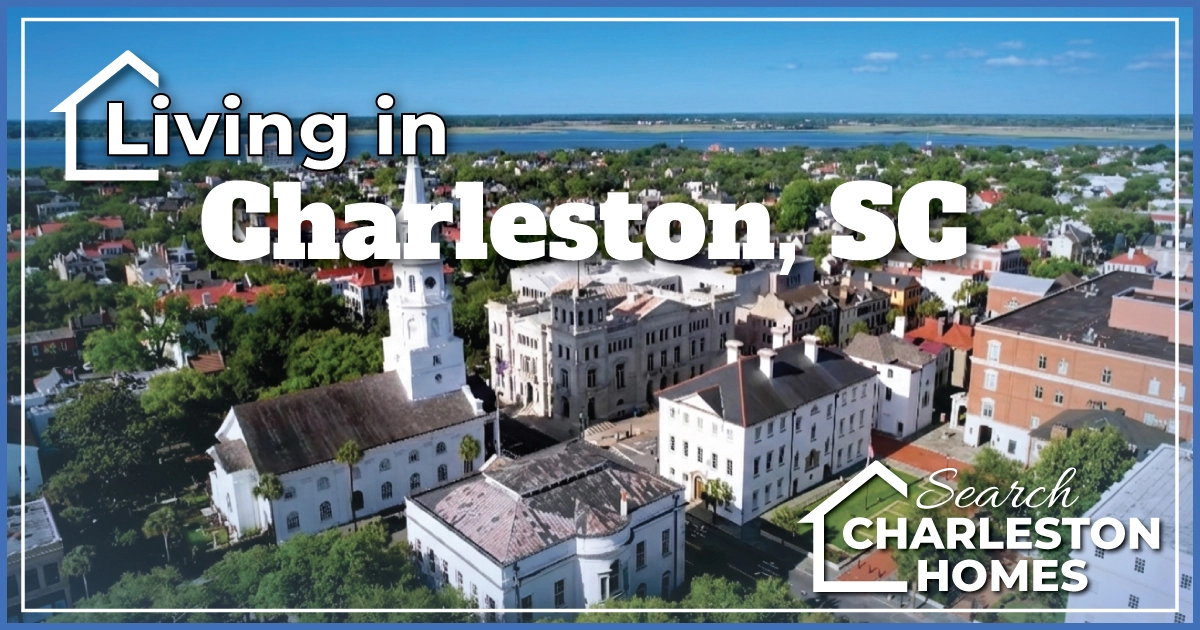
When most people start moving to Charleston, SC, they picture one place. They picture the peninsula, the church steeples, and the horse carriages downtown. The real decision is rarely about the city itself. It is about which part of the Charleston area fits your week. That choice shapes your commute and your home budget. It also shapes your flood risk and how much you actually enjoy living here. I have helped buyers settle in all over the Lowcountry, and the ones who pick the right sub-area first are almost always the happiest a year later.
Charleston is spread out, and that is the tradeoff nobody mentions in the brochures. You can love the area and still get stuck in traffic if you buy in the wrong spot for your routine. This guide walks through where people live and how the commute works. It also covers what flooding really means for your insurance and what it costs to be here. My goal is simple. I want you to make this move with your eyes open.
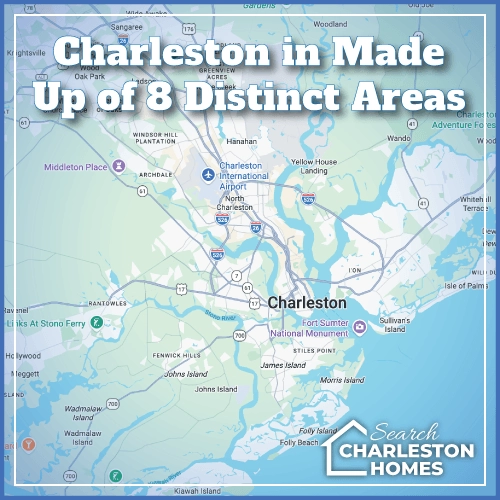 The biggest mistake I see from out-of-town buyers is treating the whole region as one neighborhood. It is not. The Charleston metro is a collection of distinct towns and islands. Each one has its own feel, price range, and drive time. Locals will tell you, half joking, that Charleston is an hour away from Charleston. They are talking about the sprawl. The area keeps growing, and the places people call home stretch well past the historic district.
Each of these areas answers a different question. One thing I notice when showing homes here is that buyers relax once they stop comparing a beach cottage to an inland new build. They are not the same product, and they should not carry the same expectations. Here is a quick side-by-side, then a closer look at each one the way I would break it down on the phone. Prices move, so treat any number here as a dated snapshot from mid-2026, not a promise.
| Area | Setting | Drive to Downtown | Rough Price Level |
|---|---|---|---|
| Mount Pleasant | Established suburb, beach access | About 15 to 25 minutes | Higher |
| Daniel Island | Planned island town center | About 15 to 20 minutes | Higher |
| James Island | Close to downtown and Folly | About 10 to 15 minutes | Mid |
| Johns Island | Rural, fast-growing | About 20 to 35 minutes | Mid to varied |
| West Ashley | Central, older neighborhoods | About 10 to 20 minutes | Mid, often lower |
| North Charleston | Job and industry core | About 15 to 25 minutes | More attainable |
| Summerville | Inland, newer construction | About 30 to 45 minutes | Lower |
| Goose Creek | Berkeley County, more space | About 25 to 40 minutes | Lower |
Drive times depend on the hour, so test your own routes before you decide. More on that below.
Mount Pleasant sits just across the Arthur Ravenel Jr. Bridge from downtown. It draws buyers who want suburban amenities with quick beach access to Sullivan’s Island and Isle of Palms. Homes here run higher than most of the metro, often in the high six figures and up. You can browse current listings on my Mount Pleasant homes for sale page. If you want to go deeper on specific neighborhoods, I have written guides on living in Carolina Park and living in Dunes West.
Daniel Island feels like its own small town inside the city limits. It has a walkable center, parks, and a planned layout. Prices tend to land in the upper range, similar to Mount Pleasant. See what is available on my Daniel Island homes for sale page.
James Island gives you fast access to both downtown and Folly Beach, which is rare. Johns Island is larger and more rural, with newer subdivisions going up every year. James Island prices usually sit in the mid range, while Johns Island spreads wider depending on how far out you go. Start with my James Island homes for sale and Johns Island homes for sale pages.
West Ashley is the central option a lot of first-time Charleston buyers overlook. It has older established neighborhoods, a short hop to downtown, and prices that tend to undercut the islands. I often steer commute-focused buyers here. Check my West Ashley homes for sale page.
North Charleston is the working core of the region. It is home to Boeing, the port terminals, and much of the area’s job base. It offers some of the more attainable prices in the metro. Browse my North Charleston homes for sale page.
If your budget is tighter or you want newer construction with more square footage, look inland. Summerville and Goose Creek give you more house for the money, with the tradeoff of a longer drive to the coast. See my Summerville homes for sale and Goose Creek homes for sale pages.
For the beach lovers, the barrier islands are their own world. Folly Beach, Sullivan’s Island, and Isle of Palms carry premium prices and a slower pace. I love showing them, but I always remind buyers that beach living means daily-routine planning. The drive matters more than the listing.




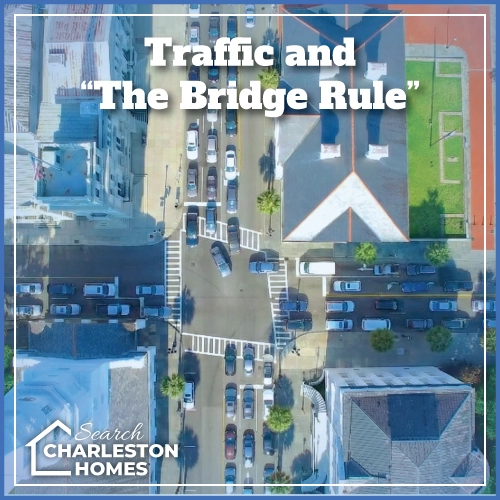
I tell every relocating buyer the same thing. Your commute decides your daily life in Charleston more than your home price does. The area is built around bridges and a few main corridors, so a few miles can mean a very different drive depending on the hour.
Before we look at a single house, I ask buyers to map their actual week. Where do you work? Where will the kids go to school? Where do you buy groceries? Then we test those routes at the real hours you would drive them. A 9 a.m. test drive tells you almost nothing about the 5 p.m. reality on the bridges.
There is also a local bridge rule worth knowing. The Ravenel Bridge connecting Mount Pleasant and downtown can face restrictions in high wind. When sustained winds climb past about 30 miles per hour, advisories go up, and high-profile vehicles get limited. It is not a daily problem, but it is part of life on the East Cooper side.
If you plan to work downtown, you have options beyond driving and parking. The CARTA DASH trolley runs free routes through the peninsula. The Charleston Water Taxi connects Mount Pleasant and downtown across the harbor, which some commuters genuinely enjoy. These will not replace a car for most people, but they change how you think about living near the water.
Flooding is the single most important thing to understand before you buy in the Lowcountry. It is not just hurricanes. Heavy rain can flood downtown streets, and king tides push water into low spots even on clear days. I would rather you hear this from me now than learn it after closing.
The practical issue is flood insurance, because the cost swing is large. A home in the lower-risk Zone X may need little to no federal flood coverage, while a home in Zone AE can run well over a thousand dollars a year, sometimes several thousand. That difference can change what you can afford on the same monthly budget.
Two steps protect you here:
On the hurricane question, people are often surprised to learn the last direct major hurricane hit was Hugo in 1989. That does not mean the risk is gone, and storm season still calls for a plan. It does mean the fear is sometimes bigger than the recent history. I always tell buyers to respect the water, insure for it, and not let it scare them away from a home they love.
People are not moving to Charleston by accident. The job base has grown into something real, and that growth is a big reason prices have held up. A few employers anchor the whole region.
Boeing builds the 787 Dreamliner in North Charleston, and it is one of the area’s largest private employers. The company broke ground in late 2025 on a $1 billion expansion that will add more than 1 million square feet and over 1,000 jobs in the coming years. That kind of commitment tells you the region is not slowing down.
The Port of Charleston is the other heavyweight. Its harbor was deepened to 52 feet, making it the deepest on the East Coast, which keeps the biggest container ships coming. The port connects to a large share of jobs across South Carolina.
Healthcare is the steady employer many buyers work for. MUSC is one of the largest employers in the area and a major teaching hospital. On the tech side, Google announced a nine billion dollar investment in late 2025 to expand data centers in nearby Berkeley and Dorchester counties. Add Volvo and Mercedes-Benz Vans plants in the region, and you can see why the metro keeps adding people.
When buyers ask me whether the growth is real, I point them to the cranes at the port and the construction at Boeing. This is not a town hoping for jobs. It already has them.
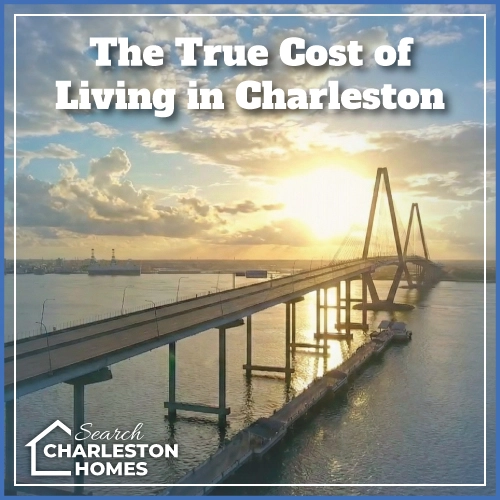
Home prices across the Charleston metro have climbed for years. As of mid-2026, the area median sits in a wide band depending on the source and property type, roughly from the mid-400s to the mid-600s. The islands and Mount Pleasant push higher, while inland towns like Summerville and Goose Creek come in lower. I share specific comps for your target area rather than relying on a single regional number, because that single number can hide a lot.
South Carolina taxes work in your favor in a few ways. The state income tax ranges from low to mid 6%, and military retirement pay is exempt from state income tax. That last point matters to a lot of the buyers I work with near the bases.
Property taxes have a quirk worth planning for. Owner-occupied primary homes are assessed at a 4% ratio, while second homes and investment properties are assessed at a 6% ratio. The gap adds up on your annual bill, so confirm your status early. You can run numbers with the Charleston County tax estimator before you buy.
Flood insurance, which I covered above, belongs in your monthly math too. A home that looks affordable on the listing can tighten quickly once you add the right coverage. I would rather build that into your budget now than surprise you later.
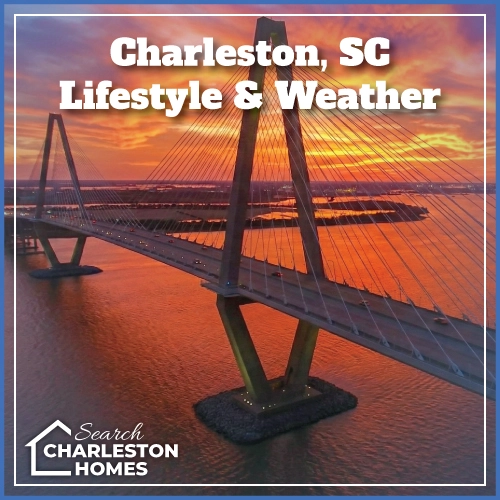
Charleston weather is a real selling point most of the year. Spring and fall are long and pleasant, and winters are mild. The honest tradeoff is summer. From June through September it gets hot, and the humidity is heavy enough that newcomers often say their first two summers are the hardest. After that, you adjust, and you learn to love early mornings.
Then there are the bugs. They come with coastal living, and pretending otherwise does no one any good. A few realities to plan for:
None of this is a dealbreaker for the people who live here happily. A pest service and screened porches handle most of it. I mention it because I would rather you plan for it than be caught off guard your first August.
Once you pick your area, the day-to-day gets easier than the map suggests. Charleston International Airport offers a long list of nonstop destinations, which makes travel and visits home simple. For most daily errands you will drive, but the peninsula has the free DASH trolley and the harbor water taxi I mentioned earlier.
Schools are assigned by your home address, not by reputation, so check this carefully before you buy. Most of the metro falls under the Charleston County School District, and you can confirm assignments with the district’s school locator tool. If you are looking in Summerville, much of that area is in Dorchester District Two, which has its own find-my-school tool. I always have buyers verify the assigned schools for the exact address before they fall in love with a house.
Making friends here is easier than in many growing cities, partly because so many people are also new. The East Cooper Newcomers Club is a common first step for people on the Mount Pleasant side. Beyond organized groups, life here happens outside. A walk on the Pitt Street Bridge in the Old Village at sunset is a local favorite, and an early-morning beach trip before the heat sets in is one of my own simple pleasures. The seafood, the marsh views, and the slower coastal pace are why people stay.
These are the questions buyers ask me most before they relocate.
For most people, yes, as long as you pick the right part of the metro for your routine. The job base is strong, the coast is close, and the pace is slower than a big city. The honest tradeoffs are summer humidity and a spread-out region that makes your commute choice matter.
It depends on your daily drive and your budget. Mount Pleasant and Daniel Island sit at the higher end, James Island and West Ashley keep you close to downtown, and Summerville or Goose Creek give you more space inland for less money. Match the area to your week first, then shop homes.
It is the thing to study hardest before you buy. Heavy rain and king tides can flood low streets even without a storm. The bigger budget issue is flood insurance, since a Zone AE home can cost far more to insure than a Zone X home. Always check the FEMA flood zone for a specific address.
Home prices across the metro land in a wide band, roughly from the mid-400s to the mid-600s as of mid-2026, with the islands higher and inland towns lower. South Carolina income tax tops out in the low-to-mid 6 percent range, and military retirement pay is exempt. Build flood insurance into your monthly math.
Moving to Charleston, SC works best when you choose your sub-area first and the house second. Get the commute right and understand your flood zone. Confirm the assigned schools, and build flood insurance into your budget. Do that, and the rest of Charleston living tends to live up to the reputation.
If you want help matching your week to the right part of the metro, that is exactly what I do. I am happy to map your routine, pull real comps for your target area, and walk you through the tradeoffs before you commit. Call or text me, Bob Chambers, at 843-296-2546 whenever you are ready. You can also start browsing Charleston homes for sale any time. The move is a big one, and I would be glad to help you get it right.