$6,700,000
Active Under Contract
5
Beds
5
Baths
4022
Sqft
0.31
Acres
126 Hibben St, Mount Pleasant, SC 29464
MLS#: 26027327


Old Village is the original neighborhood of Mount Pleasant, a 37-block waterfront historic core on Charleston Harbor and Shem Creek with about 2,300 homes. The buy spans interior cottages to harbor-front trophy estates in a finite, preservation-controlled footprint with no HOA. We sort Old Village first by location, then by renovation rules, and finally by flood exposure. An interior cottage and a harbor-front estate can share the same walkable footprint but carry different flood zones, approval paths, and price tiers.
Buyers compare Old Village to the only pre-20th-century Mount Pleasant neighborhood with a walkable commercial district and harbor frontage, and to the historic core where the town's oldest streets and homes still anchor daily life. James Hibben surveyed the core street grid in 1803, and the oldest home, the Hibben-McIver House at 111 Hibben Street, dates to about 1759. Downtown Charleston is about 10 minutes away over the Arthur Ravenel Jr. Bridge, and Sullivan's Island is about 5 minutes out via the Ben Sawyer Bridge. Isle of Palms is about 15 minutes east through the IOP Connector.
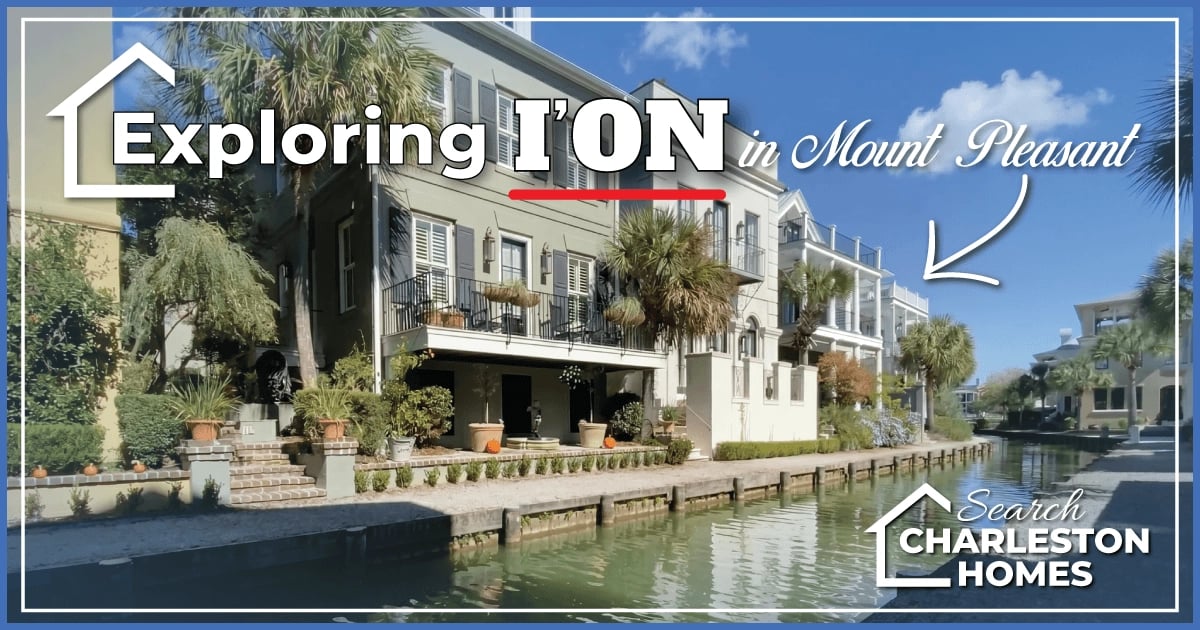
Old Village pairs with I'On as a walkable, design-controlled Mount Pleasant community, though Old Village is the genuine historic original, while I'On is a 1990s New Urbanist plan. Longpoint and Snee Farm swap the village walkability for subsection structure and amenities. The trade is clear: fewer planned-community amenities, but more historic fabric, Pitt Street access, and harbor or creek frontage.
Old Village reads as a collection of micro-neighborhoods rather than a single planned community, assembled from five English settlements laid out between 1766 and 1853. The formal Old Village Historic District, listed on the National Register since 1973, covers about 30 of the 37 blocks and is subject to the strictest preservation review. The mix includes restored 18th- and 19th-century buildings, 1940s cottages, 1960s brick ranches, and contextual new construction that mirrors the historic scale, with mid-century ranches on larger lots often selling for land value and replacement.
The Pitt Street commercial district anchors daily life, with a compounding pharmacy and soda fountain dating to 1937, a boutique inn and restaurant, wine shops, and gift and antiques stores. The Pitt Street Bridge, an 1898 trolley crossing turned walking and biking path, spans the marsh with views of the Ravenel Bridge and Sullivan's Island. Shem Creek frames the northern edge with working shrimp and oyster boats, and a former ferry terminal nearby serves as the neighborhood's main event venue.
Old Village listings commonly reference the Mount Pleasant Academy, Moultrie Middle School, and Lucy Garrett Beckham High School attendance path through Charleston County School District. Mount Pleasant Academy lies within Old Village, and Moultrie Middle offers experiential learning programs tied to Shem Creek and the harbor. Boundaries can shift, so confirm the specific property with the district before you plan around a campus.
A local historic district commission governs the neighborhood, and exterior changes within that district require a Certificate of Appropriateness, while interior work is exempt from review. Flood exposure varies parcel by parcel. Interior blocks generally appear as Zone X on the FEMA Flood Map Service Center, while harbor-front and creek-edge lots are Zone VE or AE, with mandatory flood insurance for financed buyers. Nuisance tidal flooding hits a few low spots, and percentage-based named-storm deductibles at these price points can reach five figures, so pull the elevation certificate and wind quote early.
Search Charleston Homes guides Old Village buyers through district boundaries, elevation details, insurance exposure, and renovation limits before we tour homes. Whether your priority is a walk-to-Pitt-Street cottage or a harbor-front setting, we match the home to your budget, your renovation tolerance, and your flood tolerance. Call 843-296-2546 or reach out through our contact page.