New - 7 Days Ago


$2,350,000
Active Under Contract
5
Beds
5
Baths
3320
Sqft
0.2
Acres
141 N Shelmore Blvd, Mount Pleasant, SC 29464
MLS#: 26027326



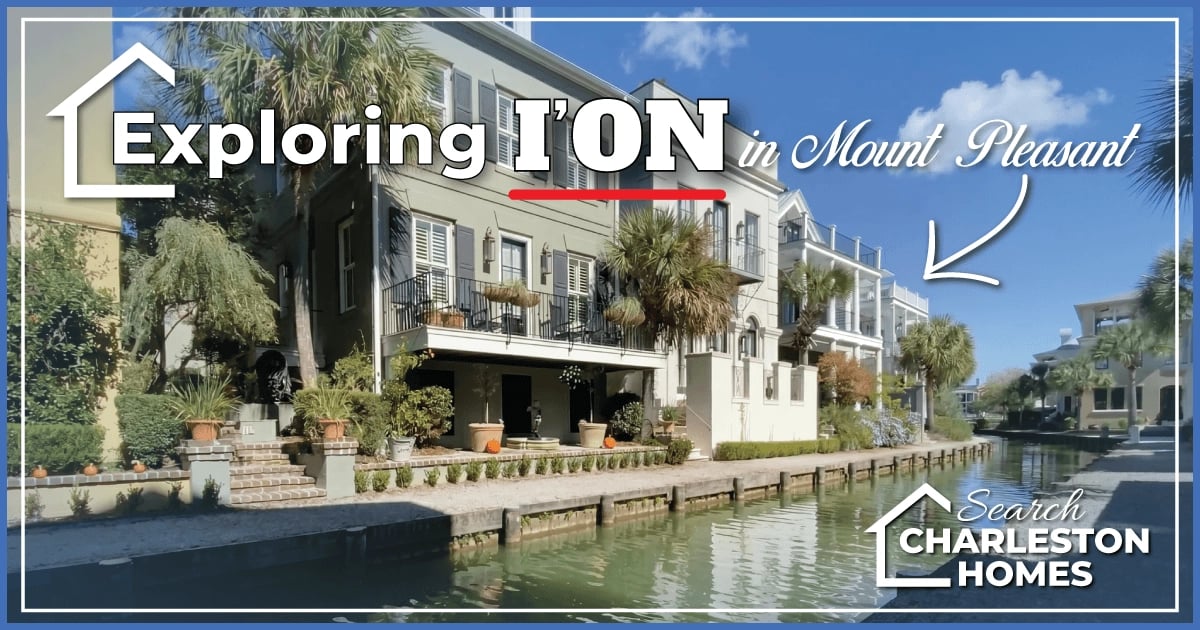
If you are looking for Mount Pleasant homes for sale and want a neighborhood with more character than a typical suburban subdivision, I’On deserves a serious look. It is a one-of-a-kind neo-traditional neighborhood with Charleston-inspired architecture, a private social and tennis club, small village shops, restaurants, lakes, canals, and a location close to Downtown Charleston.
I personally think I’On is one of the most recognizable neighborhoods in the Lowcountry. You feel the difference as soon as you turn into the community. The streets are tighter, the homes sit closer to the sidewalk, and the porches feel like part of the neighborhood.
For buyers, the appeal is easy to understand. I’On gives you a polished village setting in the middle of Mount Pleasant, less than 10 minutes from downtown Charleston in typical conditions. The trade-off is that homes are close together, parking can feel tighter than in newer communities, and the best listings don't come up as often. I'll cover all of this in the post below.
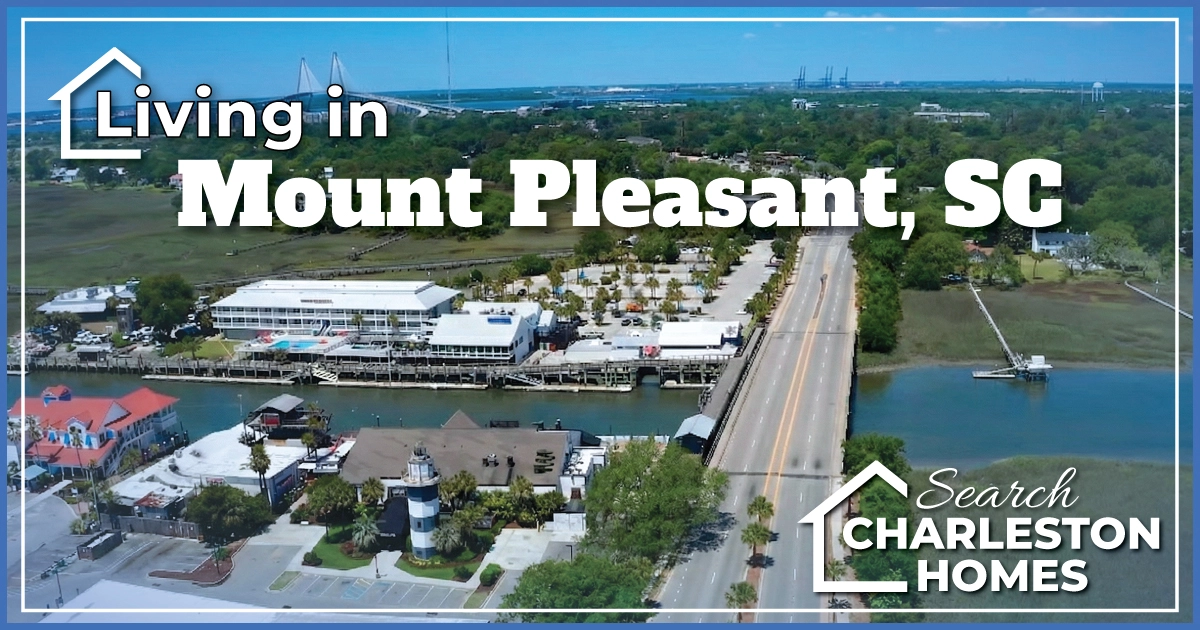
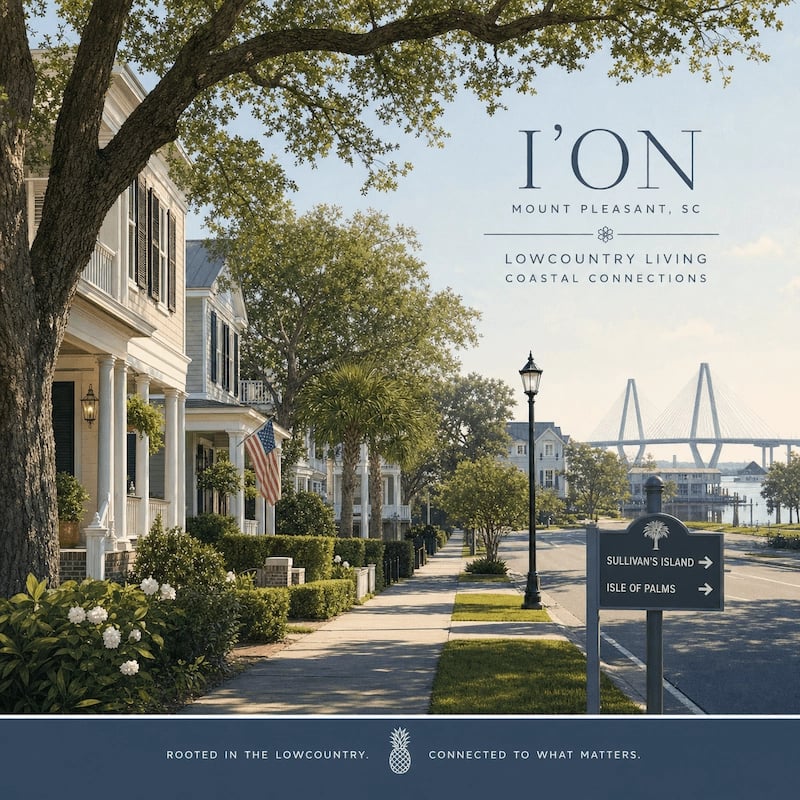
 I’On is located off Mathis Ferry Road in Mount Pleasant. That places it near the Ravenel Bridge, Shem Creek, Old Village, Coleman Boulevard, and the beaches on Sullivan’s Island and Isle of Palms. From I’On, downtown Charleston is about 10 minutes away in typical conditions, and the beach is about 15 minutes away.
This location is a major reason buyers compare I’On with some of the most desirable neighborhoods around Charleston. You can live in a quiet residential setting while staying close to restaurants, grocery stores, medical offices, schools, waterfront areas, and beach access.
When we talk with buyers about I’On, we usually describe the location as convenient without feeling generic. You are close to the daily places people use in Mount Pleasant, but the neighborhood itself still feels tucked away once you are inside.
I’On was planned around traditional neighborhood design and New Urbanism, which focuses on walkability, mixed uses, public spaces, and streets that feel more connected to daily life. The community was developed as a 243-acre residential neighborhood inspired by traditional neighborhood design concepts.
The layout is the first thing most people notice. Streets are narrower than in many newer subdivisions. Homes are closer to the sidewalk. Garages are often accessed from alleys, which keeps the front of the home focused on porches, gardens, and street presence.
That design gives I’On a different feel from many master-planned communities. It is not built around wide roads and deep front yards. It feels more like a small Lowcountry village that was planned with public spaces, lakes, canals, pocket parks, and walkable streets in mind.
One thing we notice when showing buyers I’On is how quickly they understand the concept once they walk it. They may not know the planning terms, but they can feel that the streets, porches, greens, and homes were designed to work together.
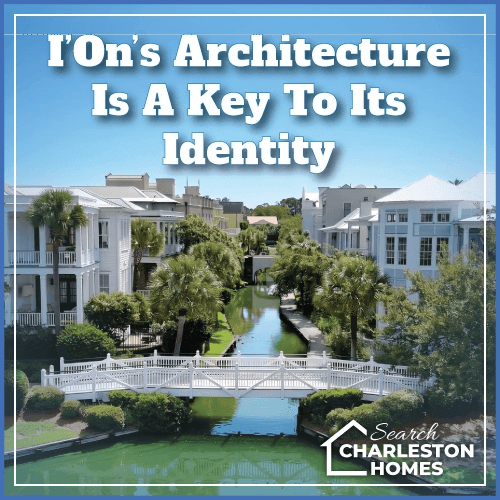 Homes in I’On are a major part of the neighborhood’s identity. Many properties borrow from Charleston and Lowcountry design traditions, including piazzas, shutters, raised foundations, courtyards, garden walls, gas lanterns, and carriage-style garage access.
The neighborhood does not feel like a production-built community where the same house repeats every few lots. Homes vary by size, setting, age, and builder, but they still share a consistent architectural language. That balance is part of what gives I’On its visual appeal.
The I’On Design Committee helps maintain the neighborhood’s cohesive streetscape. Buyers should understand that exterior changes, renovations, additions, landscaping, and visible updates may be subject to neighborhood design review.
We usually tell buyers to pay attention to the lot and street as much as the house. In I’On, porch placement, alley access, parking, views, and the feel of the street can change how a home lives day to day.
Some I’On homes appeal to buyers searching for Charleston luxury homes, but the premium is not only about square footage. In this neighborhood, design, setting, street presence, and scarcity all matter.
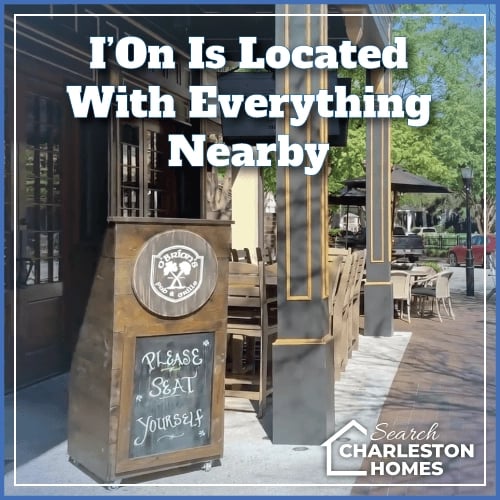
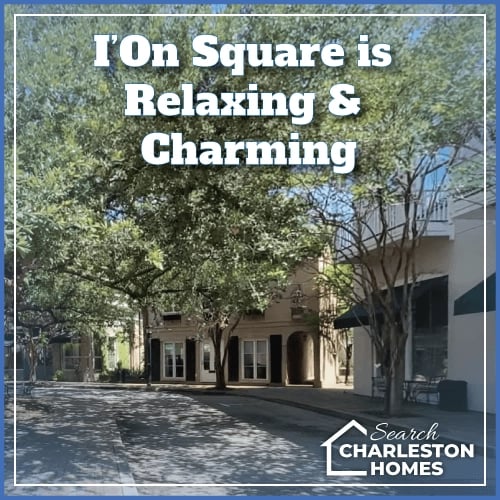 I’On Square is one of the features that makes the neighborhood feel different. Instead of having only homes and an amenity center, I’On has a small commercial district with restaurants, shops, services, and gathering places worked into the community.
That village center includes local businesses such as Square Onion, O’Brion’s Pub & Grille, The Shellmore, Community Table, and Bakies at I’On. These kinds of businesses help I’On feel more like a small town center than a closed-off residential subdivision.
The benefit is not that residents never need to leave the neighborhood. They still use the rest of Mount Pleasant for errands, shopping, schools, and appointments. The benefit is that I’On offers a few everyday places close to home, which adds a lot to the neighborhood's character.
I think I’On Square is one of those details buyers appreciate more in person than on paper. A few restaurants and shops may not sound like much, but when they are part of the neighborhood fabric, they change how the community feels.
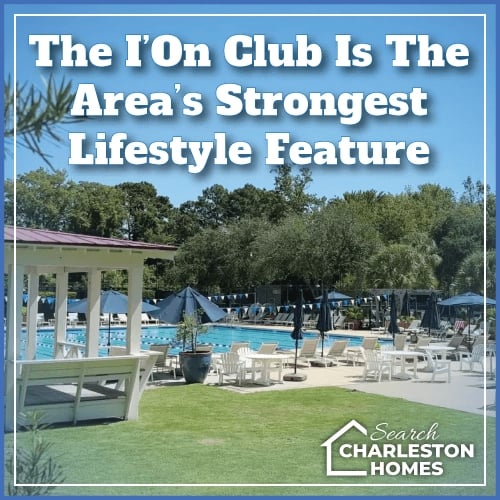 The private I’On Club is one of the neighborhood’s strongest lifestyle features. It offers tennis, pickleball, swimming, fitness, group classes, dining, and social spaces in the heart of the community.
The club amenities include three saline pools, a year-round Junior Olympic pool, six clay tennis courts, four hard pickleball courts, fitness facilities, and The Lido dining area. For buyers who want club access close to home, this can be a major advantage.
It is important to understand that the club is private. Buying a home in I’On does not automatically mean every club detail works the way a buyer assumes. Membership options, fees, waitlists, and access policies should be verified directly with the club before making a decision.
When buyers ask me what separates I’On from other Mount Pleasant neighborhoods, the club is usually part of the answer. It gives the neighborhood a social and athletic center that many nearby communities do not have.
The Creek Club at I’On is one of the most recognizable settings in the neighborhood. It sits near Hobcaw Creek and is often associated with weddings, events, marsh views, and the waterfront side of I’On.
For buyers, it is helpful to separate the event venue from the resident lifestyle around the water. I’On has marsh, creek, lake, and canal settings, but not every home has direct water access. Some homes have views, some are near trails or lakes, and others are more interior.
Buyers who want true water access should compare I’On with broader waterfront homes around Charleston and Charleston homes with a dock. I’On has beautiful water features, but it is not the same as owning a private deepwater dock behind the house.
We usually slow buyers down in this part of the conversation. Water views, proximity to marshes, boat access, flood zones, and dock rights are all different things. They can affect price, insurance, maintenance, and daily use in very different ways.
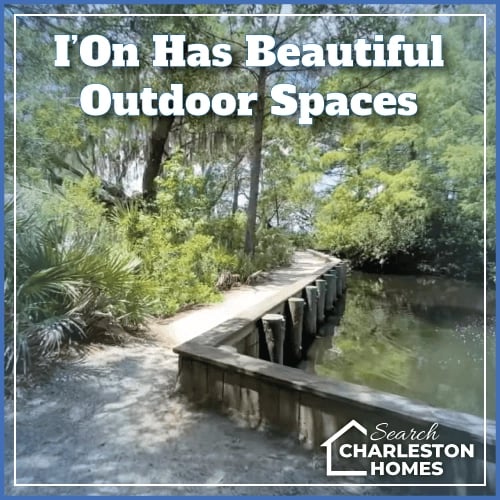 Outdoor spaces are woven throughout I’On. The community features lakes, canals, bridges, greens, trails, pocket parks, and preserved spaces that give the neighborhood a layered feel. Instead of one large amenity area doing all the work, the public spaces are spread throughout the community.
Eastlake and Westlake give parts of I’On a scenic feel, while the trails and bridges create short walking routes that make the neighborhood more interesting than a simple grid of homes. Those outdoor spaces are a big part of why I’On feels different from a standard subdivision.
When We tour I’On, we like to look at how a property connects to these outdoor spaces. A home near a green, a lake path, or a quiet pedestrian route can feel very different from a home on a narrower, interior street.
Another part of I’On’s identity is the neighborhood calendar. The I’On Trust helps support cultural, civic, and community activities that bring residents together throughout the year.
The neighborhood’s event culture is one reason I’On feels more social than many residential areas. Residents may be drawn to concerts, seasonal gatherings, porch events, holiday traditions, and volunteer opportunities. That does not mean every buyer wants that level of activity, but it is part of the neighborhood’s personality.
This is where I’On can feel very different from a quiet subdivision where people mainly interact at the mailbox or amenity center. The community was designed around public spaces, and the events help activate those spaces.
We usually tell buyers to be honest about how much neighborhood energy they want. Some people love that I’On has a strong social rhythm. Others may prefer a more private setting with less daily interaction.
I’On is beautiful, but it is not the right fit for every buyer. The same planning decisions that make the neighborhood charming also create practical tradeoffs. Homes can be close together. Streets can feel narrow. Parking may require more thought than in newer communities with larger lots.
The neighborhood also has a more formal ownership structure than some buyers expect. Buyers should review HOA documents, design guidelines, club membership details, transfer fees if applicable, rental rules, insurance considerations, and any property-specific disclosures before making a decision.
Flood considerations should be reviewed property by property. Some buyers start with the FEMA Flood Map Service Center, but they should also speak with an insurance professional and review the specific property’s elevation, history, drainage, and policy options.
In my experience, I’On works best when buyers understand the tradeoffs before they fall in love with the streetscape. If you know the parking, privacy, HOA, and insurance questions up front, you can evaluate the homes more clearly.


I’On is often compared with Old Village because both appeal to buyers who want charm, walkability, and a strong sense of place. The difference is that Old Village feels more historic and less planned, while I’On feels more intentional and cohesive.
Compared with Old Village, I’On may offer more structured neighborhood design, stronger architectural consistency, and a built-in village center. Old Village may appeal more to buyers who want older homes, less neighborhood formality, and quick access to certain parts of historic Mount Pleasant.
Buyers may also compare I’On with Belle Hall, Longpoint, Snee Farm, Dunes West, Park West, and Carolina Park. Those neighborhoods can offer different lot sizes, amenity styles, price points, and commute patterns.
When I help buyers compare I’On with other Mount Pleasant neighborhoods, the decision usually becomes more emotional than mathematical. I’On may not win on lot size or privacy, but it often wins with buyers who care most about design, setting, and daily neighborhood feel.
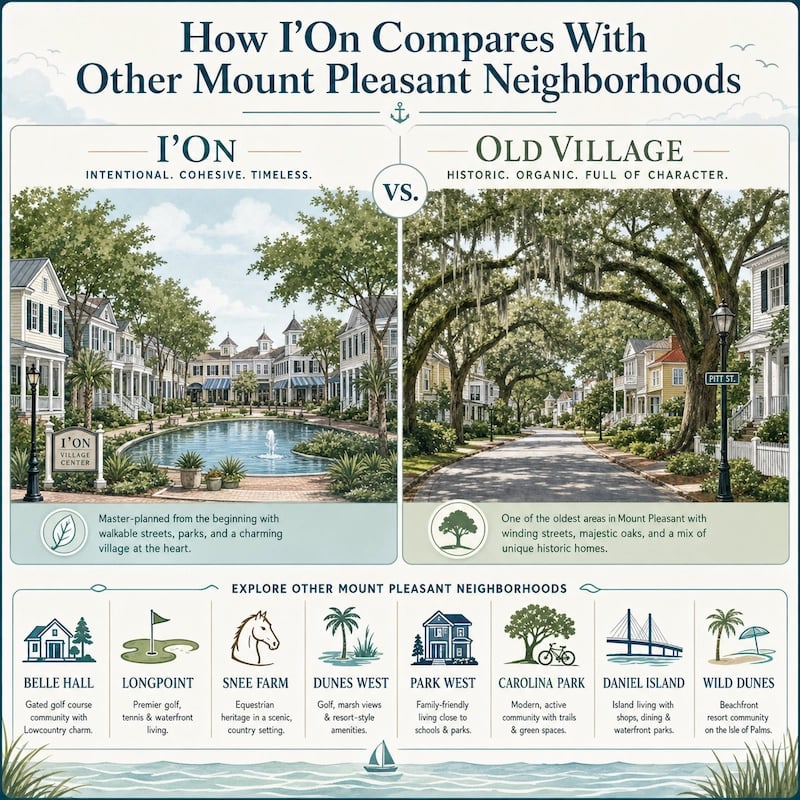
If you are still comparing options, the guide to the top neighborhoods in Mount Pleasant is a good next read. You can also compare nearby lifestyle markets such as Daniel Island and Wild Dunes.
Buying in I’On takes preparation because inventory can be limited. The community is already built out, and many owners stay for years. When a strong listing comes on the market, buyers who already understand the neighborhood are usually in a better position.
Before touring homes, it helps to know which tradeoffs matter most. Some buyers care about being near I’On Square. Others want a lake view, better parking, a larger courtyard, a quieter street, or a home that has already been renovated.
Buyers looking at I’On may also want to compare it with new construction around Charleston, Charleston golf course homes, Charleston homes with a pool, and homes for sale in 29464. Those searches can help clarify whether I’On is the right fit or whether another lifestyle makes more sense.
I usually encourage serious I’On buyers to walk the neighborhood more than once. Drive it at different times, observe parking patterns, visit I’On Square, and pay attention to how the homes sit on their lots. Those details matter here.
I’On is one of the most distinctive neighborhoods in Mount Pleasant. It has Charleston-inspired homes, a true village plan, the private I’On Club, I’On Square, water features, trails, and a location that keeps you close to downtown Charleston and the beaches.
The neighborhood is not perfect for everyone. Buyers who want more land, wider streets, newer homes, or a more conventional suburban layout may prefer another Mount Pleasant community. Buyers who want charm, design, walkability, and a strong neighborhood identity often find I’On hard to beat.
From a local real estate perspective, I’On is the kind of neighborhood that needs to be experienced in person. The photos help, but the street rhythm, porch scale, lake views, club setting, and I’On Square are what usually make buyers understand the appeal.
If you are interested in homes for sale in I’On or want to compare I’On with other Mount Pleasant neighborhoods, contact me, Bob Chambers, with Search Charleston Homes. You can also call 843-296-2546 to discuss current listings, pricing, trade-offs, and the Charleston-area neighborhoods that best fit your goals.
Finding a home in the Lowcountry is an exciting process. Most guides tell you to visit the same three tourist spots. We want to look at things differently today. Real locals care about more than just a pretty view. You need to know how the streets actually function on a Tuesday morning. This search requires a street-smart approach to the local market. We will focus on the details that truly matte
Mount Pleasant is an incredibly popular real estate destination. Buyers from across the country target this exact spot when they relocate, dreaming of the coastal lifestyle. They also want to avoid downtown peninsula traffic.The local geography completely dictates the housing market. This area sits directly between the Cooper River and the Atlantic Ocean. You can drive from most neighborhoods to
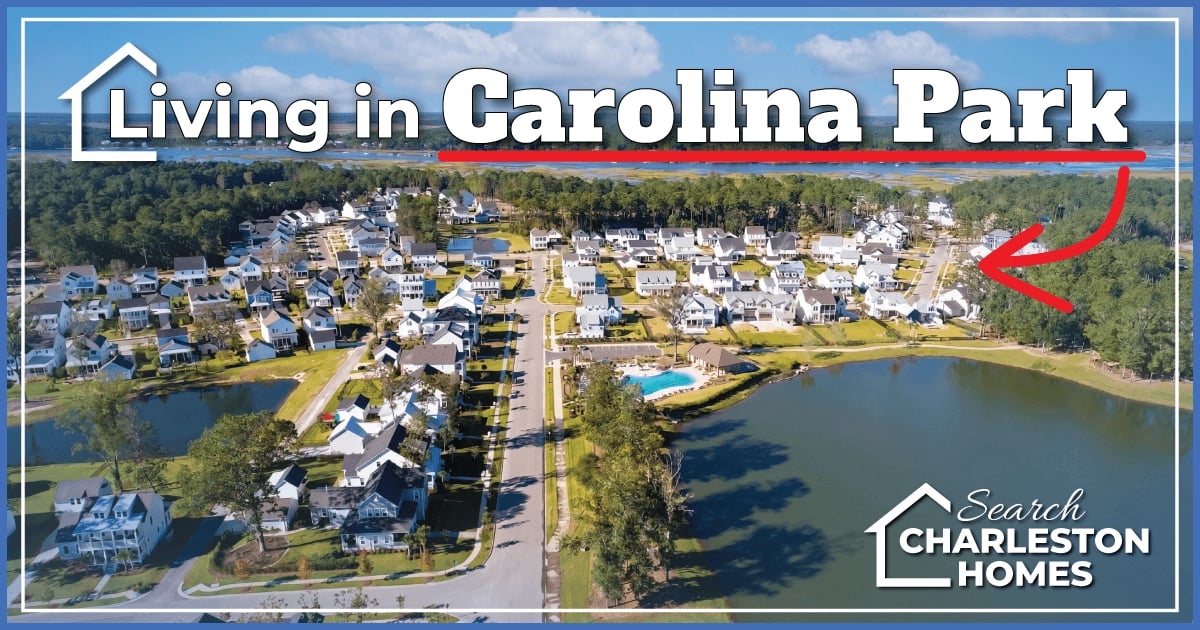
Carolina Park is one of the most popular neighborhoods in Mount Pleasant, SC. The community spans close to 1,700 acres across two main sections, The Village and Riverside. Riverside holds the larger lots, custom builds, and Bolden Park with its lake and boardwalk. The Village runs closer to the shops and townhomes near the main entrance. I'll cover everything you need to know about this area, dra
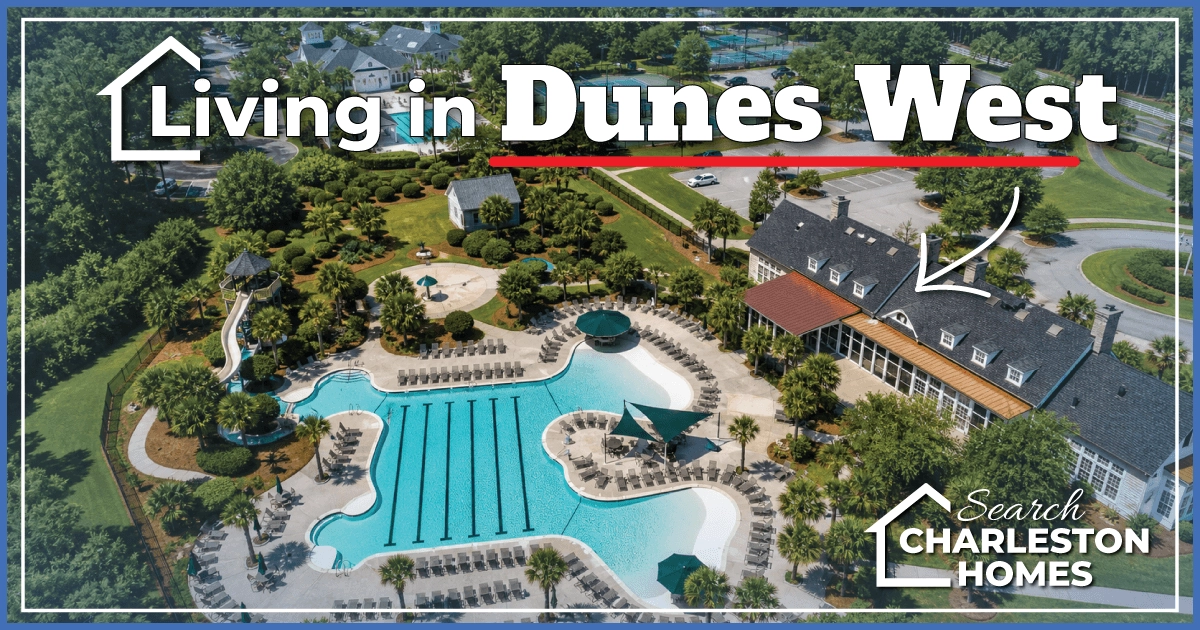
If you've ever seen the sunset on the Wando River, while boats coast back toward the docks, and the marsh grass turns gold, you know how special it is. That's a regular day in Dunes West. Live oaks dripping with Spanish moss line the streets at the entrance. This is why I love it here so much.This community sits inside Mount Pleasant, on about 1,500 acres of Lowcountry land. People who move here